
Transforming Homes for the Next 100 Years: My Takeaways from HAMMAR South West
I recently attended the HAMMAR South West event, hosted as part of the National Housing Maintenance Forum (NHMF). It was a fantastic session that brought together brilliant academic minds and housing experts to look at the future of our communities.
A huge thank you to the speakers for sharing such valuable insights:
- Professor Jo Patterson, Laura Brain and Joel Cady from Cardiff University / Prifysgol Caerdydd
- Dr Emma Taylor and Dr Louise King from the University of Bath
- Dr Lucy McFadzean from the University of Exeter

The overarching takeaway from the discussions is that within the social housing sector, retrofit can no longer be viewed simply as an energy efficiency exercise. The conversation has evolved far beyond fabric upgrades and technology installations. It is fundamentally about creating homes and communities that remain healthy, resilient and fit for purpose for the next century.
What struck me most was how closely today’s housing transformation challenge mirrors the original ambition behind the UK’s large-scale social housing delivery.
The Addison Act of 1919 established housing as a national responsibility, moving families out of overcrowded conditions and into homes with indoor bathrooms, private gardens and enhanced space standards. Decades later, the post-war prefab movement utilised factory-built innovation to solve a severe housing crisis with speed and efficiency.
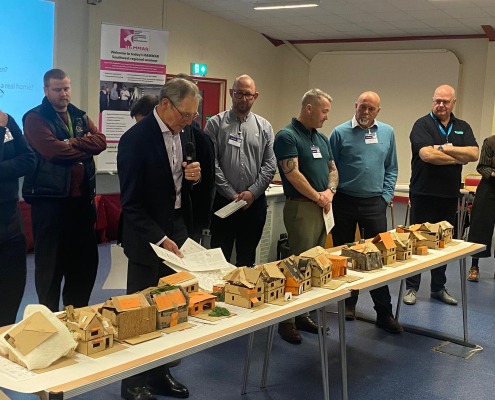
The Addison Act of 1919 established housing as a national responsibility, moving families out of overcrowded conditions and into homes with indoor bathrooms, private gardens and enhanced space standards. Decades later, the post-war prefab movement utilised factory-built innovation to solve a severe housing crisis with speed and efficiency.
The irony is that many home providers are now working desperately to retrofit yesterday’s cutting-edge innovations but failing to look at these challenges holistically means they are simply kicking the can down the road.
Today, the challenge lies in adapting these exact structures to meet modern expectations surrounding decarbonisation, climate resilience, fuel poverty and long-term sustainability.
Several critical themes stood out for the sector moving forward:
- A Whole-Life Approach: Registered Providers must move beyond a purely “tech + fabric” mindset and fully consider whole-life carbon, community design and long-term maintenance implications.
- Place-Based, Scalable Delivery: Successful transformation cannot occur solely at an individual property level. It requires a neighbourhood scale, as demonstrated by the collaborative projects currently being piloted across Bristol and Swansea.
- Meaningful Resident Engagement: A key insight from these regional pilots was the focus on understanding what residents actually value and where their frustrations lie, rather than making assumptions. This data is now helping to shape scalable design catalogues to support wider housing association delivery.
- Adopting Emerging Frameworks: We are seeing innovative, forward-thinking frameworks and standards increasingly explored as part of long-term housing strategies to drive estate compliance well ahead of baseline regulatory timelines.
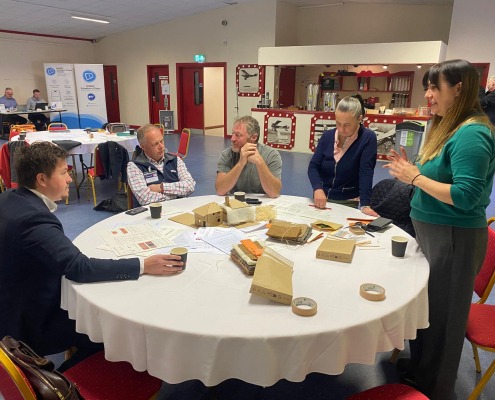
The capacity for innovation within the sector is already evident. A prime example is the Heat on the Streets project in Cornwall, delivered in partnership with Coastline Housing Ltd, which achieved an impressive 73% carbon reduction through district ground source heat systems.
However, scaling these solutions means navigating a highly fragmented delivery landscape. Housing associations and local authorities are currently operating amidst shifting regulatory expectations, supply chain limitations and short-term funding cycles. While major investment commitments like the proposed £15bn Warm Homes Plan signal a positive shift toward empowering local delivery partnerships, the focus must remain on long-term commercial viability.
With approximately 20 million properties nationally requiring intervention ahead of 2050 targets, seamless collaboration between housing associations, local authorities, specialised consultants, contractors and technology partners will be absolutely essential. We are facing a pivotal moment in social housing history, and events like HAMMAR are vital for converting industry ambition into deliverable outcomes.
By Reece Rowden
Associate Director – Social Housing, Safety & Compliance at Thomas Gray


